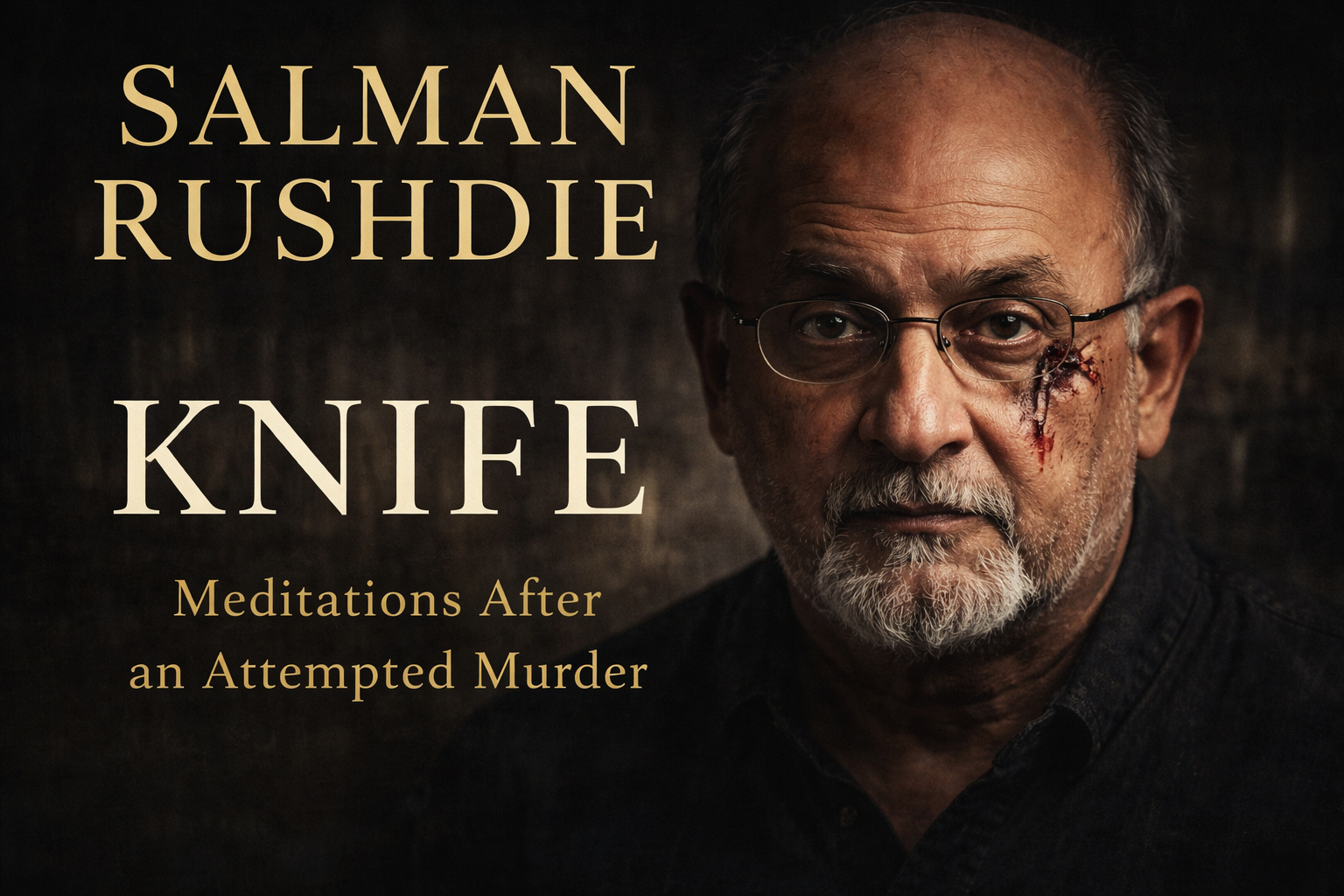
Salman Rushdie’s Knife: Meditations After an Attempted Murder transcends a mere memoir; it is a profound act of reclaiming identity after a life-altering attack. Instead of concealing his wounds, Rushdie boldly and honestly confronts them, transforming his trauma into a testament of resilience.
Following the horrific attack in Chautauqua, New York, in August 2022, Rushdie penned this book as a compelling blend of personal experience, political reflection, and existential insight. It is not simply a recounting of events but a deep portrayal of how violence can profoundly reshape a person.
Rather than presenting himself as a victim, Rushdie emerges as a fearless witness. He powerfully reminds us that a writer’s true weapons are their words and voice, and though there was an attempt to silence him, that voice miraculously endured. It now speaks back—not with fear, but with remarkable power, passion, and deep self-control.
As readers journey through Knife, they discover it to be more than a story of physical injury; it is a resonant echo of inner strength and the will to live. Rushdie may have lost vision in one eye, yet his insight becomes even sharper. His reflections ripple with clarity, irony, and emotional depth, offering readers profound understanding not just of his pain but of the broader human condition.
Notably, Rushdie deliberately refrains from naming his attacker. This silence is a powerful moral stance, born not of hatred but of conviction: “You hurt my body, not my voice.” Through his elegant storytelling, Rushdie illustrates how effortlessly he can diminish his assailant by denying him recognition.
The book powerfully showcases the transformative power of language, demonstrating how pain can be forged into words, and how those words can facilitate self-rediscovery. At times ironic, at others heartbreaking, Knife remains deeply self-aware throughout.
Reading Knife is more than learning about a writer’s ordeal; it feels like a contemplative journey, leading to self-reflection. It serves as a potent reminder that freedom of expression and creativity are not merely rights but essential tools for survival.
The book is rich with profoundly important reflections, and Rushdie’s non-fiction prose is, as always, a delight. Despite the many upheavals in his life, his distinct voice remains vibrant, and stress has not managed to extinguish his sense of humour. His views on life, society, God, religion, personal freedom, and violence are remarkably clear and full of insight.
I truly enjoyed this book, though at times the extended descriptions of his medical treatment felt a bit exhaustive. Perhaps Rushdie could have delved more deeply into the many layers of healing after such a life-altering event; doing so might have made the book even more compelling. Nonetheless, I am immensely grateful he chose to share this story with us, using the sheer magic of his literary craft.
Knife does not wound the body; it awakens the soul. A quiet tremor, a lasting echo. I give this book a rating of 4.